Fitment Instructions for Wheel Spacers
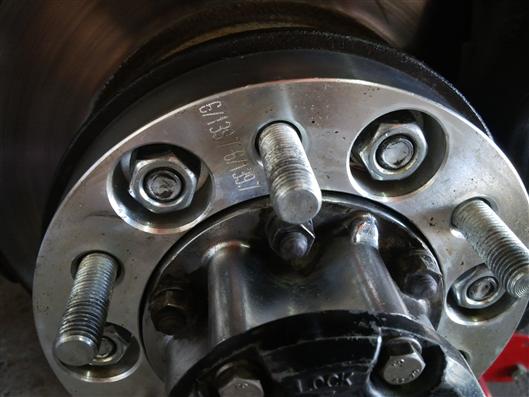
 It is important to fit the wheel spacers correctly.

It is equally important to never assume that a fitment center will know how to fit wheel spacers correctly as many of them do not know.
Most of the times when we receive wheel spacers back which “caused a vibration” there were nothing wrong with the spacers when we put it on a lathe to check. Most of the times vibrations are caused because the surface on the hub or wheel drum is not cleaned properly before the spacers are being fitted. Thus the spacer does not seat properly and cause a vibration. When we receive wheel spacers back we always see the indentation made in the spacer by the dirt that was trapped between the spacer and the hub or drum.
1. It is crucially important to ensure that the two contact areas are clean. Use sand paper to clean the wheel hub or brake drum on the vehicle.
There should be no debris on the wheel hub or brake drum. The wheel spacer’s surface should be clean as if it is new. if you fit a used wheel spacer, clean the back of the wheel spacer.
Check that the back of the spacer is perfectly flat. Sometimes somebody lets the spacer fall and when it falls on the side it makes a little indentation which causes a bulge on the back of the spacer.
2. If you fit wheel spacers to a Jeep JK, make sure you remove the assembly washers from the brake drums. See the pictures below.
3. Fit the wheel spacer. Put the nuts on by hand and tighten all nuts by hand as far as you can in a cross over pattern.
4. Torque all nuts to 30 Nm in a cross over pattern as shown in the pictures below.
5. Now torque all nuts again to 120 Nm in a cross over pattern as shown in the pictures below.
NOTE: If you oil or grease the wheel studs you MUST deduct 10 to 20% of the torque setting. You CANNOT add grease and still torque it the same setting. This might cause the stud to break because it was over tightened.
In General:
M14 Studs, 140Nm dry and 120Nm Oiled or greased
M12 Studs, 120Nm dry and 110Nm Oiled or greased
6. Fit the wheel like you would normally fit it to the vehicle.
7. Check the wheel spacer nuts after 500 km and again after 5,000 km. After that check it again every 10,000 km.
8. If you feel a vibration and you know the hub has been cleaned properly, check the wheel balancing. If the wheel is slightly off balance, the wheel spacers will amplify the problem. You must also check the ball joints. Check if the contact area between the wheel spacer and vehicle is absolutely clean.


M14 Studs, 140Nm dry and 120Nm Oiled or greased
M12 Studs, 120Nm dry and 110Nm Oiled or greased

M14 Studs, 140Nm dry and 120Nm Oiled or greased
M12 Studs, 120Nm dry and 110Nm Oiled or greased

4x4Direct South Africa